Peacock
The Bird That Eats What Would Kill You
On kujaku, and a feather that contains its own darkness — and transforms it
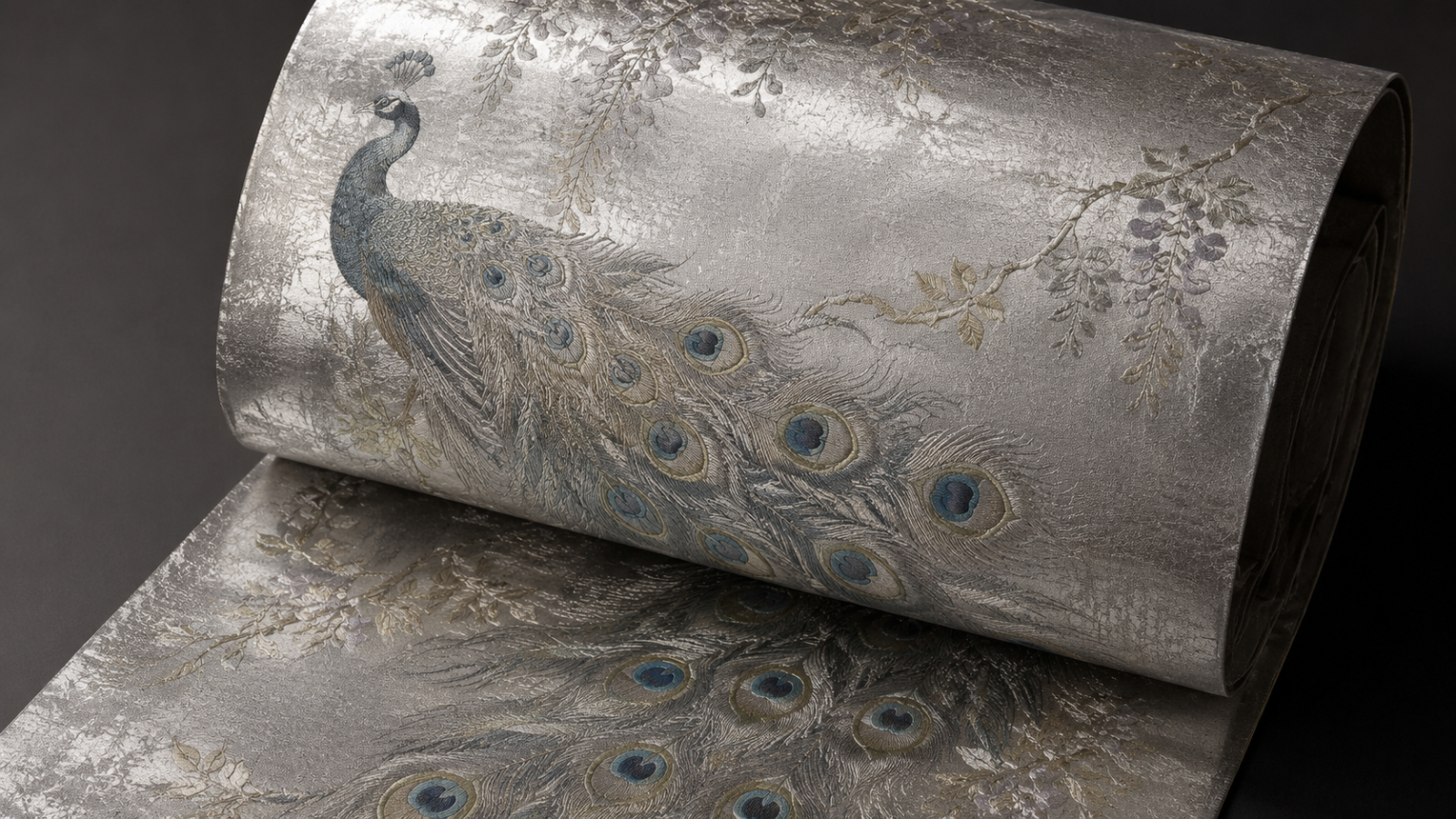
Look closely at a peacock’s tail feather. At the center of each eye: a darkness. A deep, absorbing black, ringed by iridescent blue, then green, then bronze. The eye does not reflect light so much as hold it — pulling it inward, letting some of it go. It is beautiful in a way that is difficult to look away from, and difficult to entirely trust.
This quality — beauty with a darkness at its center — may be why the peacock has carried such particular meaning in Japan. Not simply as spectacle. As something more unsettling, and more useful.
In ancient India, the peacock was observed eating poisonous snakes and plants — and surviving. Not despite the poison, but somehow through it.
This observation traveled into Buddhism, and transformed. The peacock became the symbol of a specific spiritual capacity: the ability to take in what is harmful and convert it into something else. In esoteric Buddhism, this became the basis of Kujaku Myoo, the Peacock Wisdom King. A deity of purification — unlike most Wisdom Kings, whose faces show fierce wrath, Kujaku Myoo’s expression is serene. The power here is not force. It is transformation.
On platinum-foil obi, the peacock appears with particular frequency. Platinum leaf — cooler and more subdued than gold — creates a ground that neither competes with the peacock’s color nor simply displays it. The feathers seem to emerge from something already still, already composed. The effect is less celebration than revelation: this is what survives.
Gold announces. Platinum waits. Against platinum, the peacock does not perform. It simply is — and that is enough.
The white kimono context is worth sitting with separately. The shiromuku — the pure white bridal kimono — is a garment of radical absence. And yet kujaku appears here too, often woven into the white ground so quietly it is only visible when the light shifts. A bird that eats poison, sewn into the garment a bride wears at the moment of greatest transformation.
The kujaku motif does not belong to a single season, or a single occasion. What unifies its appearances is this: the peacock has always been the motif for moments when beauty and difficulty exist together. When what is bright has earned its brightness.
To wear kujaku is not to claim ease. It is to claim the other thing — that you have taken something in, and it has not diminished you. Luminous. Composed. Already transformed.
Kujaku motifs appear in miyakorondo obi pieces — most often against dark or platinum-foil grounds, where the feather’s eye pattern holds both depth and light.