Hexagons
The Shape That Nature Keeps Returning To
On kikko, and what it means when a pattern is not invented but discovered
Every other motif in this series began with something seen — a bird in flight, a flower opening, a tree holding its color against winter. The designer’s task was to translate nature into textile, to capture a living thing in silk and thread.
Kikko began differently. It began with a question: what shape does endurance take?
The answer, it turns out, is a hexagon. Nature has known this for a long time. The honeycomb uses it. The basalt columns of cooling lava use it. And the tortoise — whose shell provided the pattern its name — carries it on its back for a century or more, each plate fitted against the next with a precision that no craftsman could improve upon.
Japan did not invent this shape. It recognized it — in the creature that lives longest, and named the pattern after the body that carries it through time.
The kikko pattern arrived in Japan via the Silk Road, passing through China during the Nara period and entering first the storehouses of the imperial treasury. From there it moved into aristocratic dress during the Heian period, where commoners were forbidden not only from wearing it, but from looking at it. The hexagon carried such concentrated association with nobility and longevity that proximity itself was considered a form of presumption.
The samurai found in kikko something the aristocracy had not emphasized: protection. Armor constructed from hexagonal plates offered the same structural logic as the tortoise shell — distributed force, no single point of failure, the whole stronger than any part.
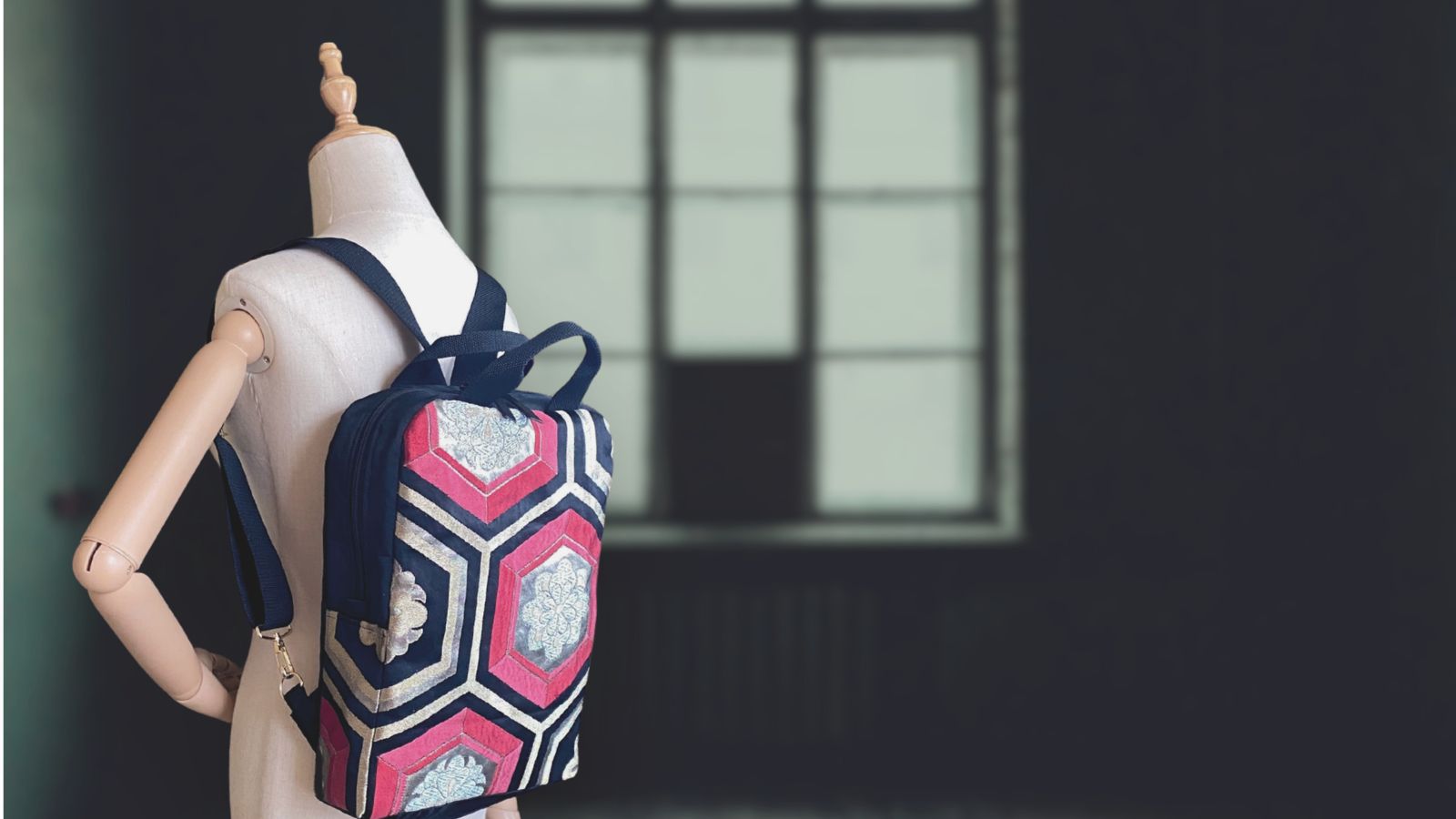
One variation, bishamonkikko, was associated with Bishamonten, the god of warriors and fortune — a configuration of three interlocking hexagons that creates a three-dimensional illusion, as if the surface has depth, as if the pattern continues into the cloth rather than sitting on top of it.
What kikko understands, that the floral motifs do not, is that repetition is its own form of beauty. Not one crane, but the principle of the crane, repeated until it becomes a ground on which everything else can rest.
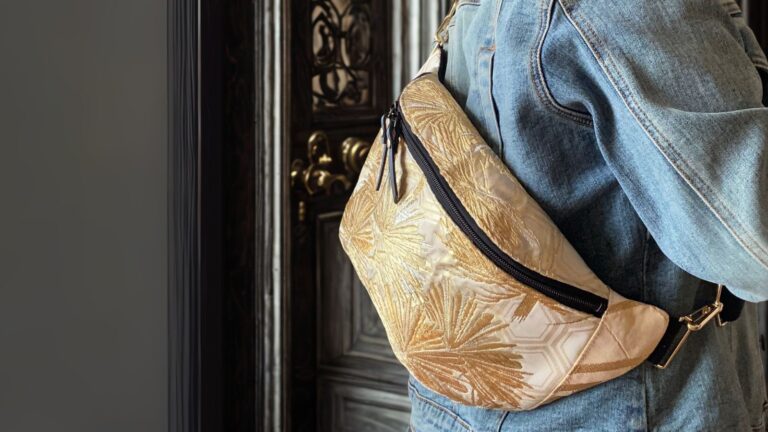
On textile, kikko operates differently from the organic motifs in this series. A crane or a peony draws the eye to itself — it is a subject, something to look at. Kikko is a structure, something to look through. It often serves as a ground for other imagery: chrysanthemums or vines placed inside the hexagons, the geometry holding the flowers in a grid that is both orderly and endlessly variable.
There is something quietly radical about the decision to take a geometric shape — one found in honeycombs and cooling rock and the back of a slow-moving reptile — and to say: this is beautiful. This is worthy of the finest silk, the most formal occasion, the highest aristocratic dress.
That decision contains its own philosophy. That structure is beautiful. That repetition is meaning. That what endures, by virtue of enduring, becomes worthy of attention. The tortoise does not bloom, does not fly. It simply persists — carrying its geometry on its back, moving slowly, outlasting almost everything.
Kikko appears in miyakorondo pieces both as a primary pattern and woven quietly into grounds — sometimes holding flowers inside its hexagons, sometimes standing alone, the geometry sufficient.