
Chrysanthemum
What the Chrysanthemum Knows About Endings
On kiku, and a flower that holds both grief and sovereignty — depending on where you stand
In much of Europe, the chrysanthemum is a flower for the dead. It arrives at cemeteries in November, placed on stone, bought in forecourts near the gate. It is not unkind — it is simply the flower that knows how to keep vigil. But it does not belong at the table, or in the bedroom, or anywhere the living gather to celebrate.
Japan begins somewhere else entirely.
Here, the chrysanthemum — kiku — is the crest of the imperial household.
Sixteen petals, perfectly symmetrical, pressed into gold. It appears on the cover of the Japanese passport. On the prow of naval vessels. At the center of the most formal ceremonial textiles. It is not a flower of endings. It is a flower of the highest possible authority — and, quietly, of long life.
The same petals. Entirely different worlds. This is not a contradiction to resolve. It is an invitation to look more carefully at what a flower can hold.
The chrysanthemum arrived in Japan from China, where it was already associated with longevity and the ninth month. Japan absorbed these ideas and deepened them. The flower became kigo — a seasonal word belonging to autumn — and entered poetry, painting, lacquerware, and eventually the warp and weft of woven silk.
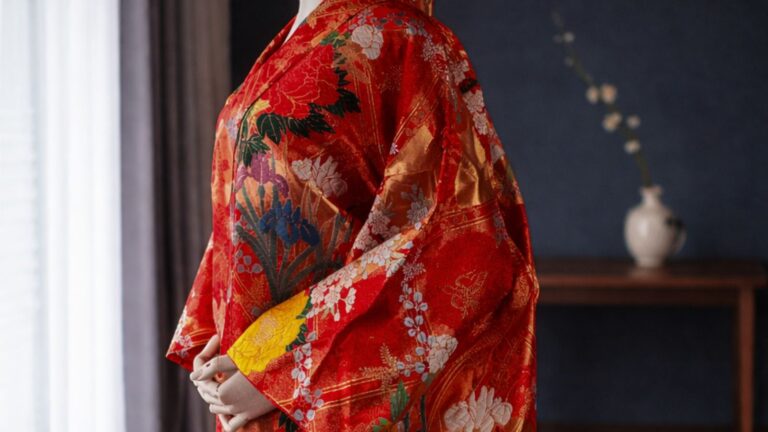
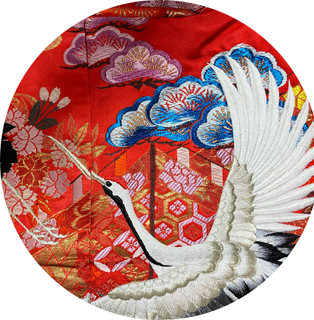
On kimono and obi, kiku appears in many forms. Sometimes as a single large bloom, rendered with the obsessive precision of a botanical study. Sometimes scattered across a ground in repeat, small and stylized, so dense that the flower becomes a texture rather than an image. Sometimes reduced to geometry: a circle of radiating lines that is more idea than flower.
What changes with the rendering is what the motif asks of you. The realistic kiku demands attention. The stylized kiku asks for recognition without effort, the pleasure of a symbol so familiar it no longer needs explaining.
To live long enough to see autumn return, year after year — that, the flower suggests, is not a small thing.
There is an autumnal quality to kiku that does not translate into melancholy, at least not in the Japanese sense. The chrysanthemum blooms late, after most other flowers have finished, and this timing became part of its meaning. Endurance. The willingness to open when the air has grown cold.
In formal obi, kiku often appears alongside paulownia, bamboo, and pine. The chrysanthemum anchors the autumn quarter of this symbolic year. It does not compete with the other flowers. It simply arrives last, and stays longest.
Perhaps this is what the European tradition senses, without knowing it — that the chrysanthemum is the flower that remains. In Japan, the other reading is equally true: it belongs near those who intend to keep going. Near the emperor, who embodies the continuity of a lineage. Near the bride, who is beginning a life.
The chrysanthemum does not choose between these meanings. It holds them both, the way autumn holds both color and cold, both abundance and the knowledge that it will pass.
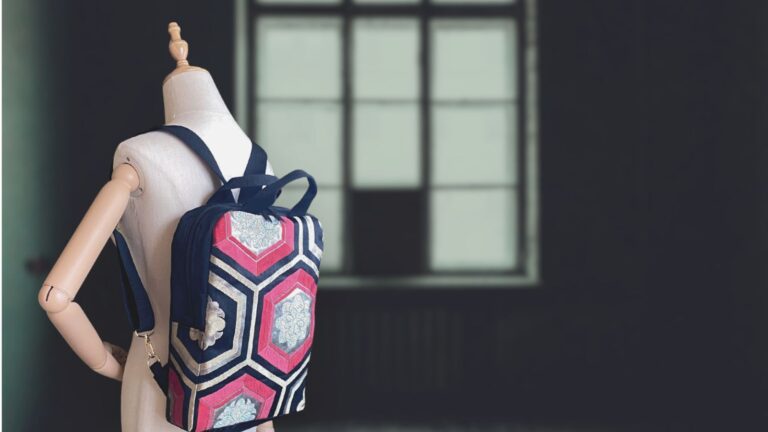
Kiku motifs appear across MIYAKORONDO obi pieces in many forms — from tightly woven geometric interpretations to fully embroidered autumn compositions. Each carries the unhurried quality of a flower that knows how to wait.