Crane
The Crane Does Not Announce Itself
On tsuru, and what it means to carry a blessing without showing it
A crane does not announce itself. It arrives — white against winter sky, unhurried, as if it has always been there.
This quality — a presence without insistence — may be why the crane has endured for so long in Japanese textile design. Not as spectacle, but as quiet authority. To place a crane on silk is not to decorate. It is to make a wish that does not need to speak.
“The crane lives for a thousand years.” The tortoise, ten thousand. Both numbers are impossible. That is the point.
In Japan, the crane — tsuru — belongs to the world of ceremony. It appears on bridal kimono and celebratory obi, on garments worn at New Year and coming-of-age.
What it holds is a layering of meanings that accumulated slowly, over centuries. Longevity. Faithful partnership — cranes were believed to mate for life, and so a pair of cranes on wedding cloth carried a wish for enduring love. Purity, through the whiteness of its feathers. Elevation, in the openness of its flight.
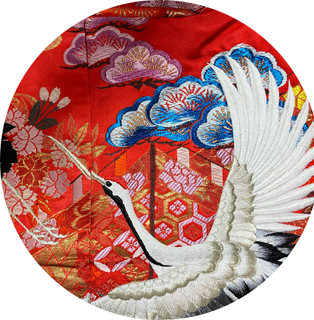
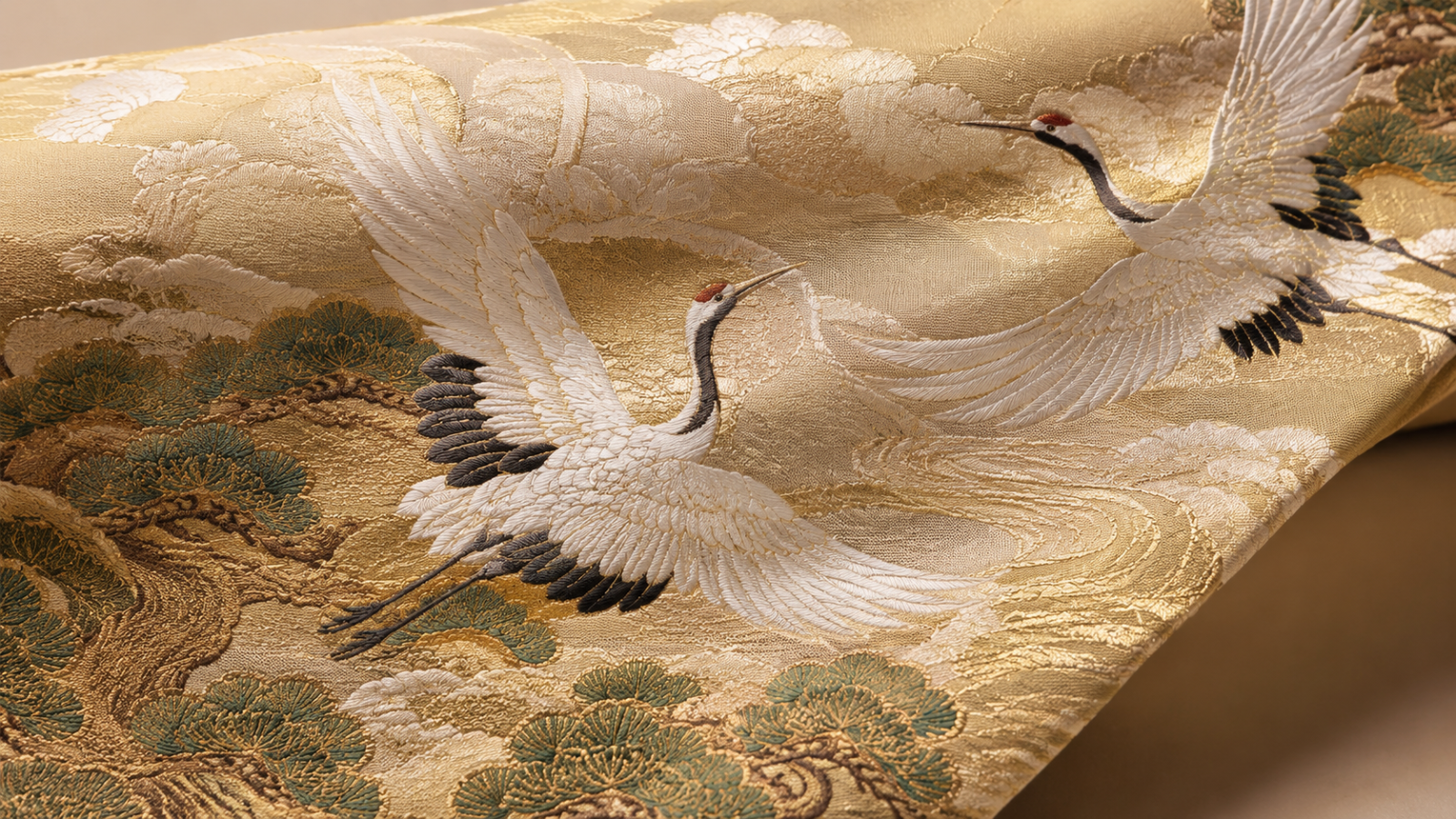
The motif arrives most dramatically in the iro-uchikake — the heavily embroidered ceremonial over-kimono worn by brides. Here, cranes often appear among pine and clouds, composed in gold and silk thread with a density of craft that takes months to complete.
Not celebration, exactly. Something quieter: the feeling of standing at the edge of something vast, and not flinching.
The crane is considered a non-seasonal motif in formal dress. It exists outside ordinary time — in the space of the auspicious, the enduring, the wished-for.
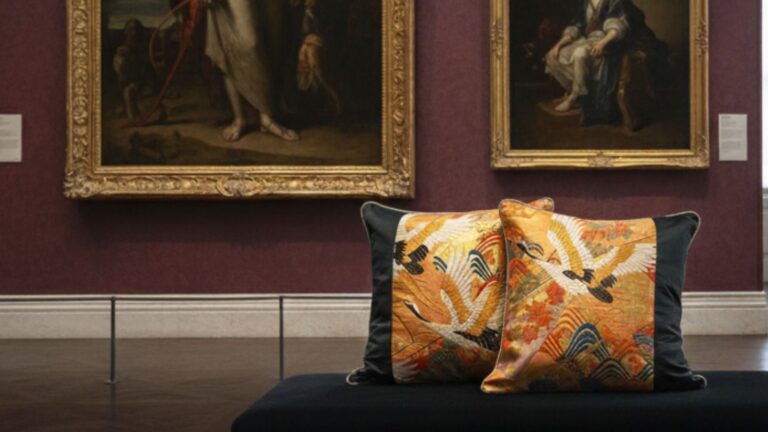
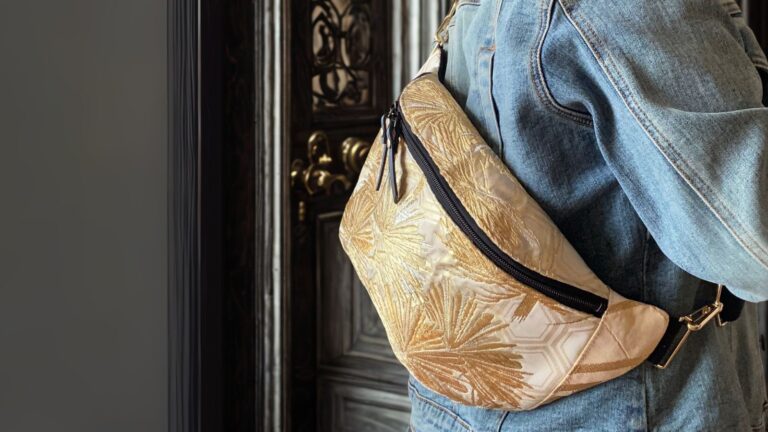
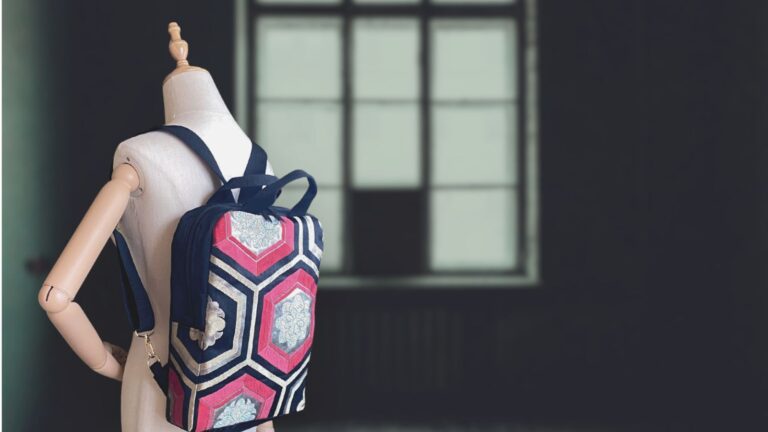
Tsuru motifs appear across several miyakorondo pieces — including bags and cushions made from embroidered iro-uchikake featuring crane and pine compositions.