Cranes: Grace, Longevity, and Auspicious Beauty
Introduction
Among the many motifs that appear in Japanese kimono and obi, few are as instantly recognizable or as deeply beloved as the crane. With its long neck, elegant legs, and sweeping wings, the crane brings a sense of dignity and stillness wherever it appears. It is a bird of poised movement, often shown gliding across the sky, standing beside water, or flying among clouds and pine branches.
In Japan, the crane is not merely admired for its beauty. It carries a long history of auspicious meaning, representing longevity, good fortune, fidelity, and peace. Its presence on garments often transforms cloth into something more than decorative. A crane motif can suggest a blessing, a wish, or a quiet prayer woven into silk.
Because of this, cranes have appeared for centuries in ceremonial garments, wedding kimono, festive obi, and textiles meant for important occasions. They are associated with elegance, but also with endurance. They feel both refined and symbolic—majestic enough for formal wear, yet gentle enough to convey warmth and hope.
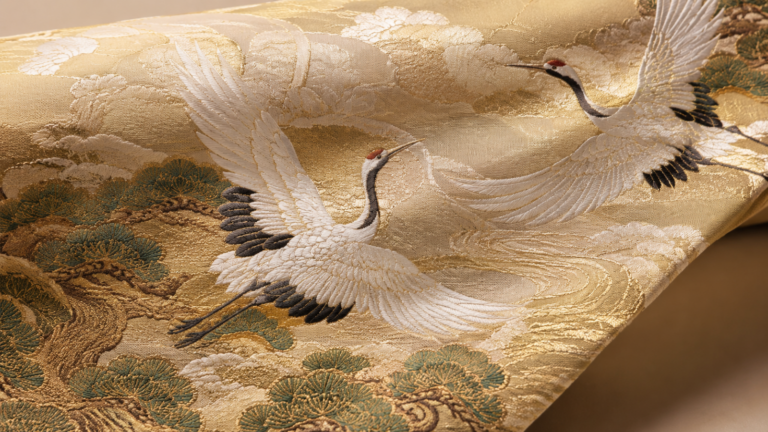
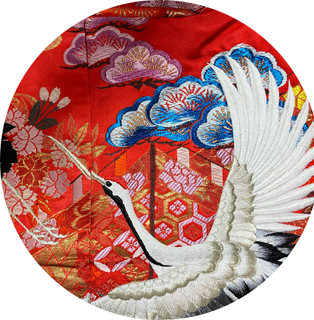
In textile design, cranes can be rendered in many ways. Some are highly realistic, with carefully detailed feathers and natural posture. Others are more stylized, reduced into graceful outlines or repeated patterns that emphasize rhythm rather than realism. Gold thread, embroidery, and painted details often heighten their presence, making the motif shimmer as the wearer moves.
The crane is one of those rare symbols that speaks across time. It belongs to court culture, seasonal poetry, wedding tradition, and everyday admiration of nature all at once. To understand cranes in kimono is to step into a world where beauty and blessing are inseparable.
Origins
The crane has long held an honored place in East Asian culture. In China, cranes were associated with immortality, nobility, and the realm of the sages. They often appeared in paintings, robes, and decorative arts as creatures that connected the earthly and the heavenly. These ideas traveled into Japan and gradually merged with native sensibilities about birds, landscape, and auspicious imagery.
In Japan, cranes became especially cherished through poetry, visual art, and seasonal observation. Their white plumage, black accents, and measured movements gave them an almost sacred presence. The sight of cranes in nature—especially against winter fields, marshes, or wide skies—left a strong impression on the Japanese imagination.
They also entered classical literature and decorative culture at an early stage. Cranes appeared in folding screens, lacquerware, ceramics, and textile patterns, often alongside pine, bamboo, tortoise, waves, or clouds. These combinations reinforced the crane’s role as an auspicious motif. Rather than being treated as just another bird, it came to signify enduring life and high celebration.
Over time, the crane became particularly important in formal costume. It was a natural choice for garments worn at weddings, coming-of-age ceremonies, New Year celebrations, and other milestones. In such contexts, the motif carried clear emotional meaning: a wish for long life, happiness, and harmony.
One reason for its lasting popularity is that it bridges realism and symbolism so beautifully. A crane is visually striking even when appreciated simply as a bird. Yet within Japanese culture, it also carries centuries of meaning. This balance between natural elegance and symbolic depth made it an ideal motif for kimono design.
Japanese Interpretation
In Japan, the crane is known as tsuru, and it is one of the most auspicious motifs in traditional design. A well-known expression says that the crane lives for a thousand years, usually paired with the belief that the tortoise lives for ten thousand. Whether taken literally or symbolically, this saying established the crane as an emblem of longevity and blessed life.
But the Japanese interpretation of the crane extends beyond long life alone. Because cranes are said to form lasting pairs, they also came to symbolize fidelity and harmonious marriage. This is one reason they are so frequently found on wedding kimono and celebratory garments. Their appearance conveys not only beauty, but also a wish for enduring partnership.
The crane is also associated with dignity and purity. Its white feathers evoke clarity and refinement, while its tall, balanced form suggests composure. Even when shown in flight, the bird appears calm rather than restless. This sense of graceful self-possession has made the motif especially suitable for formal and ceremonial textiles.
In Japanese visual culture, cranes are often depicted in idealized landscapes—flying through clouds, standing near pines, or gathering beside water. These scenes do not simply record nature. They create a poetic world of auspicious harmony, where each element supports the others. Pine suggests endurance, clouds suggest elevation, water suggests flow, and the crane becomes the noble presence moving among them.
There is also an emotional subtlety to the motif. Cranes can feel celebratory, but never loud. They bring grandeur without heaviness, and beauty without excess. For that reason, they have remained popular not only in classical kimono but also in more contemporary reinterpretations of traditional textiles.
Symbolism
The symbolism of cranes in Japanese textiles is rich and layered, but several meanings stand out most strongly.
The first is longevity. The crane is one of Japan’s most enduring symbols of long life. When woven or embroidered into kimono, it expresses a wish for health, endurance, and a life that unfolds with dignity. This makes it especially appropriate for milestone occasions and treasured garments.
The second is good fortune. Cranes are considered auspicious creatures, bringing blessings and positive beginnings. On celebratory dress, they help create an atmosphere of joy and promise. Their presence suggests that the moment being marked is not ordinary, but fortunate.
The third is fidelity and harmonious union. Because cranes are associated with pair-bonding, they became a natural motif for weddings and marriage-related textiles. A pair of cranes can symbolize mutual devotion, stability, and shared life. Even a single crane may carry echoes of this meaning within formal attire.
The fourth is peace and nobility. A crane does not evoke aggression or wildness. Instead, it suggests stillness, grace, and elevated beauty. This gives the motif a particularly refined emotional tone. It is auspicious, but also serene.
Finally, the crane can symbolize aspiration—a rising toward something higher. When shown flying upward into open sky or drifting through clouds, it can suggest spiritual elevation, hope, or transcendence. This meaning is often subtle, but it adds depth to the motif’s visual beauty.
Because cranes combine all of these associations—long life, blessing, marital harmony, serenity, and elevation—they remain one of the most complete auspicious motifs in Japanese design.
Seasonal Context
Unlike certain floral motifs that belong strongly to a single season, the crane is more flexible. It is often regarded as a motif that transcends season, which is one reason it appears so frequently on formal kimono and auspicious garments. Its meaning is not limited to spring blossoms or autumn leaves; it belongs to a broader symbolic world.
That said, cranes are often visually linked to winter and the New Year in Japanese culture. Their white bodies, open skies, and associations with pine and first blessings of the year make them especially fitting for winter celebrations. In New Year iconography, the crane appears alongside other auspicious symbols as a sign of renewal, long life, and good beginnings.
Cranes may also appear in autumn and winter landscapes, especially when paired with reeds, water, snow, or muted skies. These settings emphasize their elegance and quiet presence. At the same time, in highly decorative kimono design, cranes are not restricted by natural seasonality at all. They may fly among flowers from multiple seasons, clouds of gold, or abstract streams, creating a timeless decorative composition.
In this sense, the crane belongs less to a specific season than to the realm of ceremony and auspiciousness. It is seasonal when the design wishes it to be, but symbolic above all.
Usage in Kimono
Cranes are especially common in formal kimono, where their auspicious meaning can be fully expressed. They appear in bridal garments, furisode, tomesode, celebratory uchikake, and luxurious obi. In these settings, the motif is often large and dramatic, allowing the bird’s wingspan and elegance to unfold across the garment.
Wedding kimono are perhaps the most famous example. Cranes on bridal dress symbolize long-lasting marriage, happiness, and blessings for the future. They may be embroidered in gold and silver thread, painted among pines and flowers, or arranged in pairs across the hem and sleeves. Their presence instantly elevates the garment into something ceremonial and deeply meaningful.
On tomesode and other formal wear, cranes are often combined with pine, tortoise, bamboo, clouds, or waves. These motifs reinforce one another, creating a visual language of celebration and auspiciousness. A single garment may thus hold multiple layers of blessing.
The crane can also be stylized in repeating patterns for obi and semi-formal garments. In such cases, the motif may appear more graphic and rhythmic, sometimes reduced to wings, silhouettes, or flying forms arranged across the textile. Even when simplified, it retains its noble character.
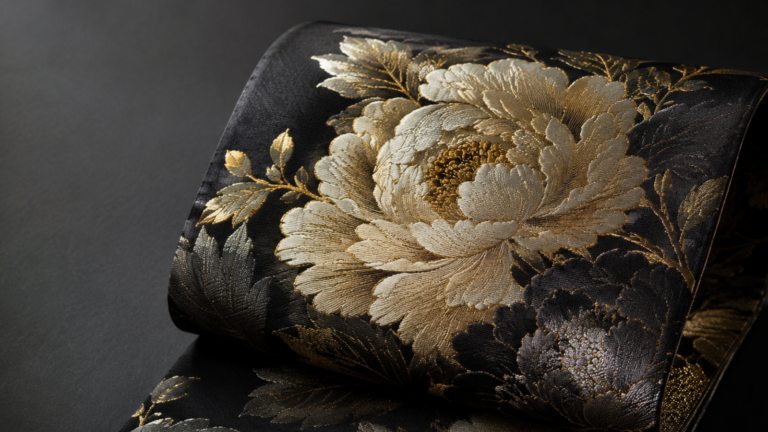
In vintage textiles, crane motifs often reveal remarkable craftsmanship. Gold couching, silk embroidery, hand painting, and woven brocade all give life to the bird in different ways. Some designs emphasize realism, while others focus on pattern and symbolic composition. This variety is part of what makes cranes so captivating in kimono history.
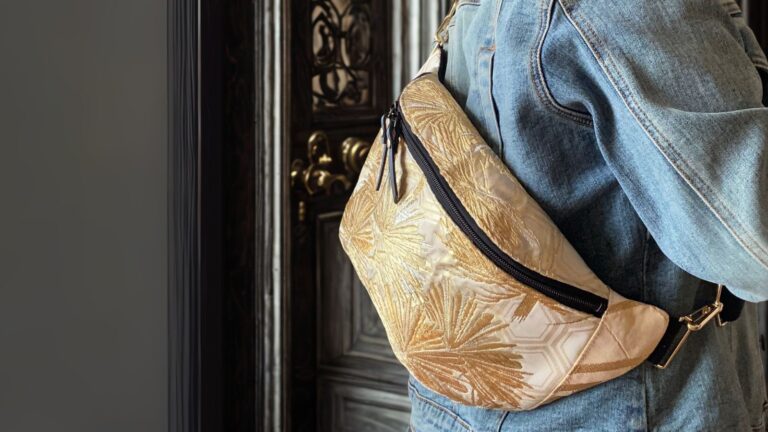
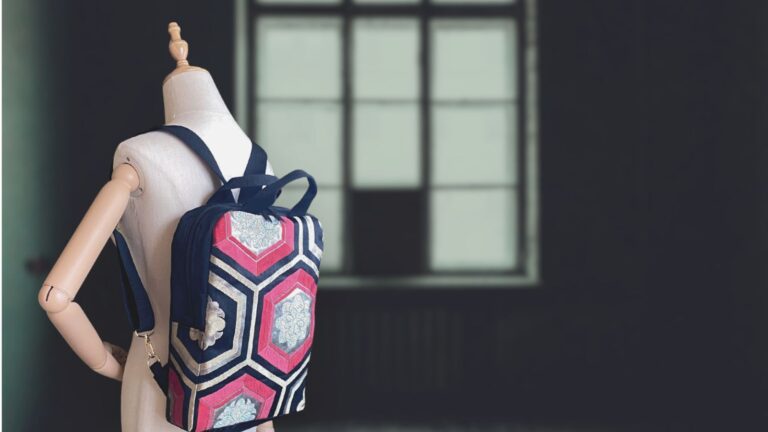
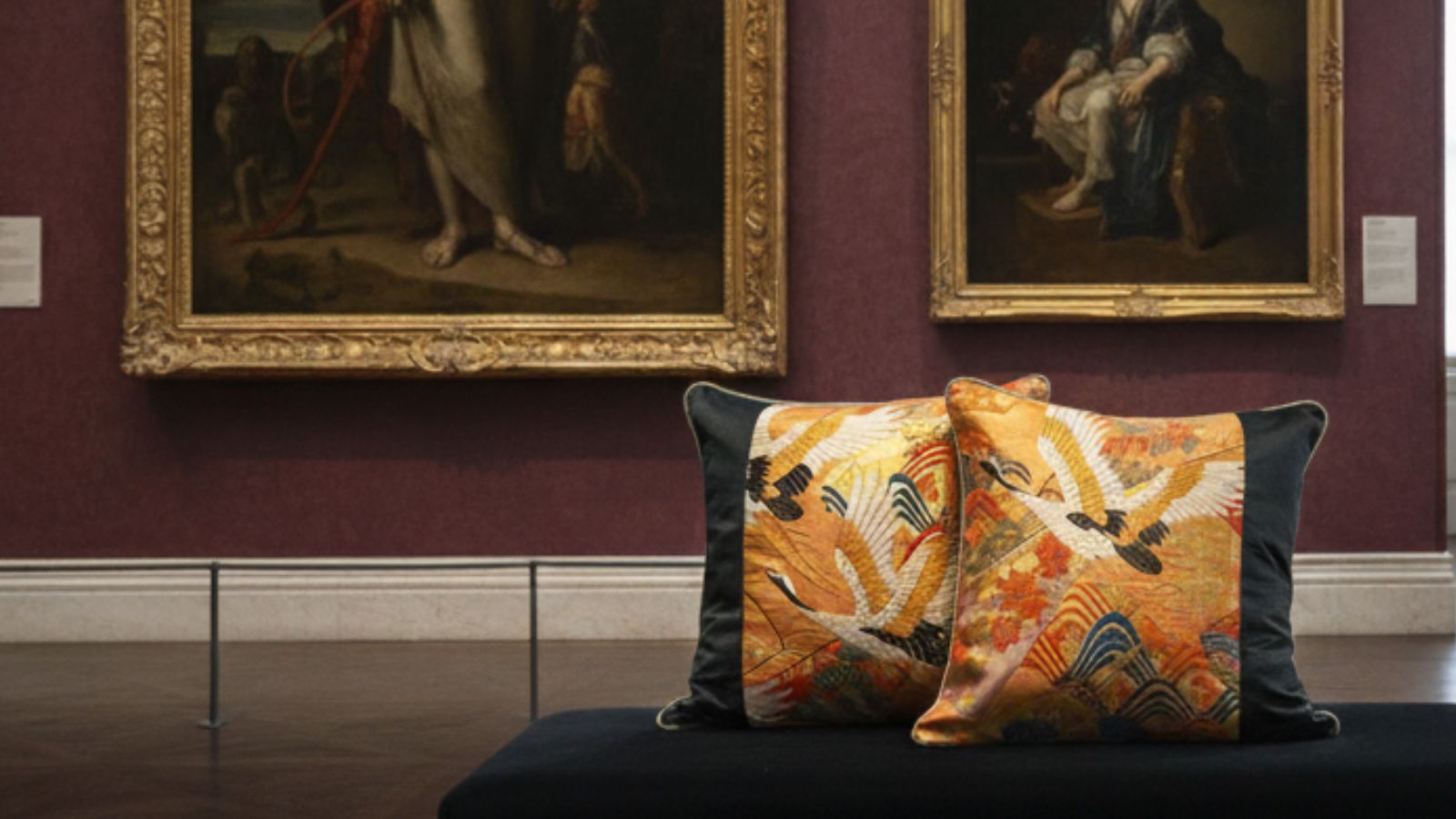
Today, crane motifs continue to resonate not only in traditional dress but also in reimagined textile works. Whether preserved in a ceremonial kimono or transformed into a modern object, the crane still carries its quiet authority and timeless grace.
Closing
The crane is one of the clearest examples of how Japanese motifs unite beauty and meaning. It is visually elegant, immediately recognizable, and filled with cultural depth. On kimono, it becomes more than an image of a bird. It becomes a bearer of wishes—for long life, faithful love, peace, and auspicious beginnings.
That may be why the crane never feels outdated. Its symbolism is ancient, yet its beauty remains fresh. Its form is delicate, yet its meaning is strong. It can be grand enough for the most formal garment and gentle enough to invite quiet contemplation.
To look closely at a crane motif is to see how Japanese design honors nature not only for its appearance, but for the feelings and hopes it can carry. In silk, thread, and gold, the crane continues to glide across time—graceful, noble, and full of blessing.