Cherry Blossom
The Flower Everyone Recognizes, Differently
On sakura, and what it means to love something precisely because it will not stay
Outside Japan, the cherry blossom is admired. It appears on packaging, on tourist posters, in the Instagram feeds of springtime travelers. It is beautiful, unmistakably Japanese, a symbol of something softly exotic.
Inside Japan, the cherry blossom does something different. It does not merely please. It releases something. When the sakura open, the body knows before the mind does. Something settles. Something is permitted again.
This is not the pleasure of beauty. It is the relief of return — the confirmation that the world has kept its oldest promise one more time.
Until the Heian period, the word “flower” in Japanese poetry meant plum. Then something shifted. The cherry blossom, wilder and more fleeting, took the word for itself. By the tenth century, “hana” — flower — meant sakura, and sakura alone.
What the Heian court recognized in the cherry blossom was precisely what made it difficult: it does not stay. Five days, perhaps seven, and the petals begin to fall. The bloom is so brief that the Japanese developed a specific aesthetic around the feeling it produces — mono no aware, the bittersweet ache of beautiful things that pass.
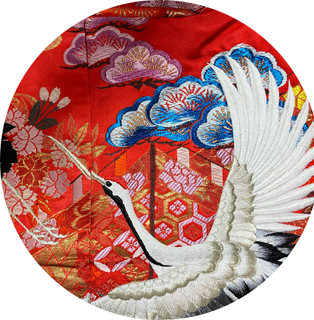
And yet on textile — woven into silk, embroidered in thread, pressed into the surface of an obi — the sakura does not fall. It is fixed. Preserved at the moment before falling. The fabric holds what the tree cannot.
The tree blooms and falls. The cloth blooms and remains. Both are true. The motif lives in the tension between them.
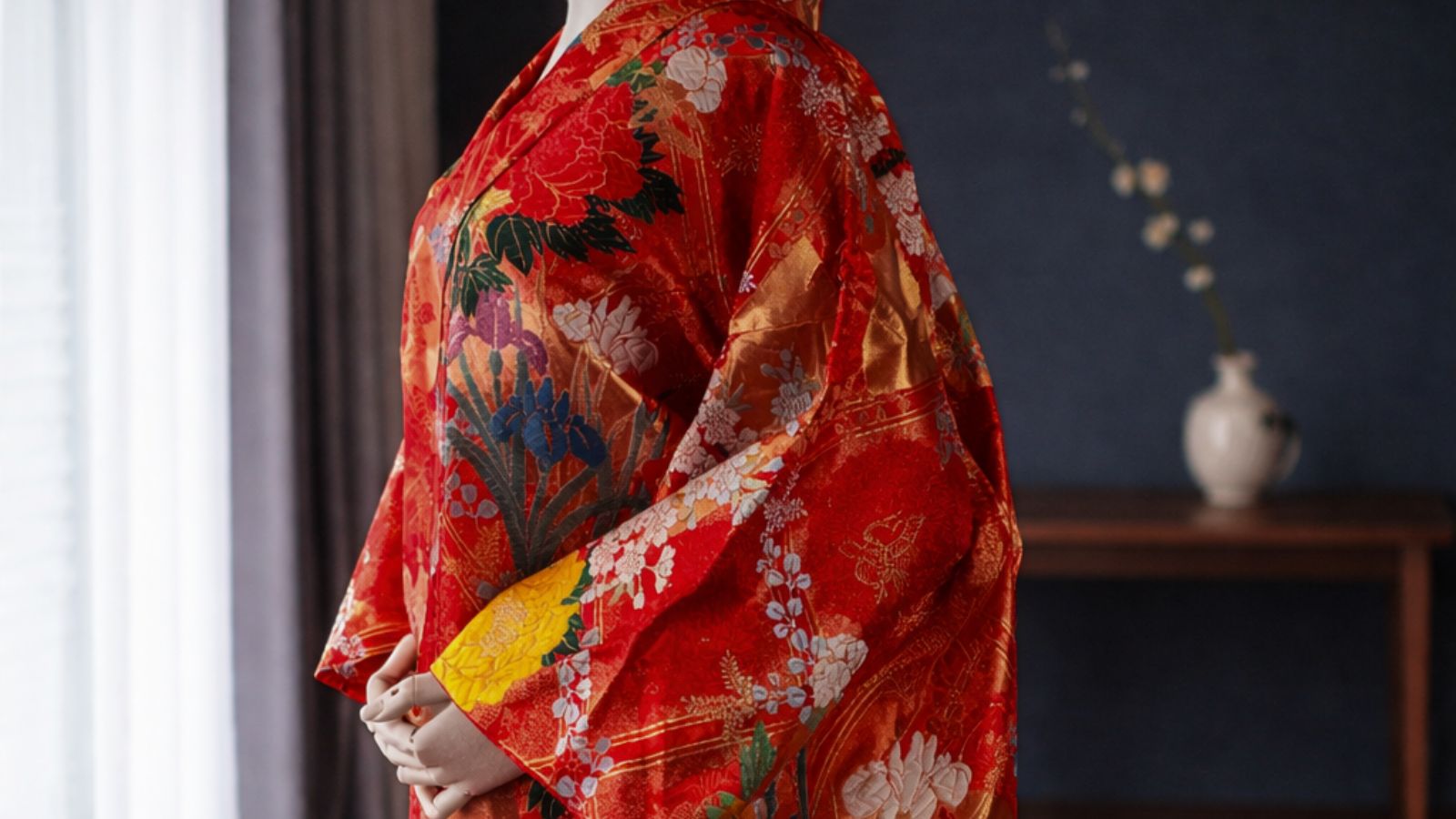
This may be why sakura appears so naturally on the shiromuku — the pure white bridal kimono worn at the threshold of a new life. Sakura on a wedding garment does not pretend that a marriage is without difficulty. It chooses instead a flower that knows its own transience — and blooms fully anyway.
What sakura has earned, over its thousand years on cloth, is the rare designation of a motif that transcends season. It became something larger: the flower of all departures and all beginnings, worn whenever a life turns its face toward something new.
To hold a piece of textile with sakura on it is to hold something that has been trusted with a great deal. The relief of return. The beauty of the brief. The willingness to open fully into a world that will not hold still.
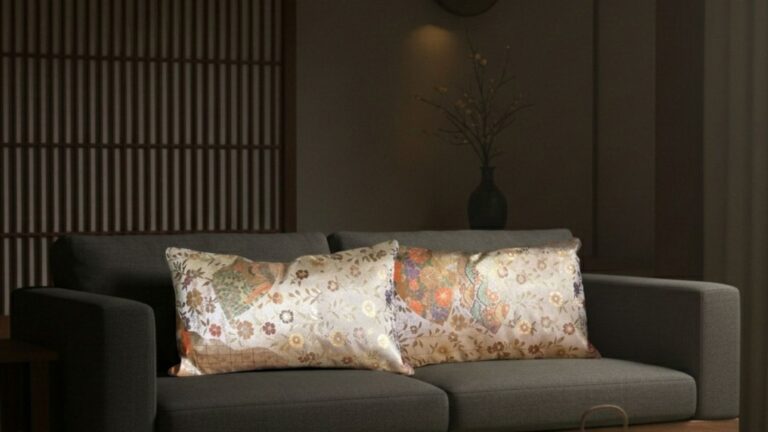
Sakura motifs appear across miyakorondo pieces — in scattered ko-zakura on quieter obi, in bold embroidered compositions on iro-uchikake. In each, the same flower: open, unhesitating, already aware of what comes next.